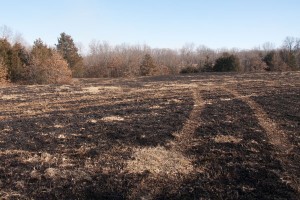
Our pasture isn’t torn up and there is residual grass

We visited some folks today who rent their pasture to a local farmer. Their pasture, pictured immediately below, quickly caught my eye. The farmer runs several cow/calf pairs, grazes until the grass no longer grows enough to sustain the cattle, then feeds hay until the spring flush comes.

DSC_4725b


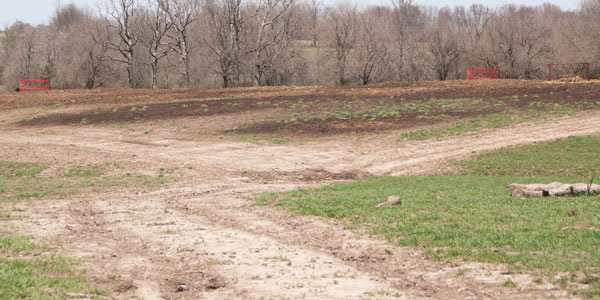
This next picture, which I also took today, is our pasture. We run out of grass just like the farmer mentioned above, however we rotate the cattle and unroll the bales as needed. About the only time we use a bale ring is when we are expecting a deep snow. With a rotational system and by not running more cattle than the land will support, we typically start supplementing forage in February compared to the farmer’s start time of November.

DSC_4740b


This farmer has considerable more cattle than we do which means more trampling but why not spread that trampling out and make it work for you? I really believe a rotational system is the way to manage pasture. Our pasture isn’t torn up and there is residual grass, with a root system in place, ready to shoot up with warmer temperatures. The cattle have mostly cleaned up the hay and the hay that is left will become fertilized, organic matter.

As a side note, this farmer also hauls his calves to another farm to wean them away from the mamma cows. (Gasp)

Weaning time is a prime example of low key, low cost management

The calves are coming up on ten months of age. The age at which we wean them from the mamma cows. This morning we gave them their first round of vaccinations. In two more weeks, the calves will be put in a pasture adjacent to one with the cows and in another two weeks, the calves will receive their booster shots. The weaning process will be complete.

Weaning time is a prime example of our low key, low cost management practice. After coffee and sausage this morning, we called the cows and calves up, flaked out some hay in the working area and let the group mill around while we set up a catch pen. A short alley runs between the working area and the catch chute in which the calves are allowed to walk in and out of. This makes it easier to run one calf in the chute when another exits out the front. No loud noises or chasing around the pen required. Low key.

The low cost comes in by performing the vaccinations ourselves. I would encourage anyone to practice this. I would advise studying the practice first though. Speak to and watch your veterinarian. Understand the correlation between weight and dosage. Get a feel for subdural injection as opposed to intramuscular. Know the proper storage and handling of vaccines, syringes and needles. And when that last needle is properly disposed of, give yourself a pat on the back for that do-it-yourself attitude.

Opportunity abounds

A fire started in our neighbor’s pasture which then spread to our pasture and winter hay supply. I won’t go into the messy details but will instead focus on the opportunity that has been presented. The opportunity to read up on and learn the benefits and consequences of burnt land and most importantly, how can I use it to my advantage.

First I read articles by folks describing the benefits of burning pastures on a timed schedule. Excess residue is burned away opening the canopy for new growth. Sunlight easily reaches the soil to promote seed germination. The left over ash from burnt matter provides stimulants for the new growth. Burning doesn’t necessarily harm grasses due to their deep root systems. Forbs, having a more shallow root system could be retarded though. Burning is also a way of managing woody species without the use of chemicals.

Other folks warn off burning and I’m joining the “other folks” group. Burning isn’t the only way to manage invasive plant species in pastures. Planned rotational grazing of cattle is an excellent tool. Cattle trample sprouts and use their leaves as forage. Heavily graze cattle in a specific area if you need to open up the grass canopy and promote a specific forage species. Burning off pastures can decrease soil’s water holding capacity and promote moisture loss through evaporation. Instead of burning organic matter away, rotate cattle through paddocks and let them press residue into the soil surface as they walk. This will shield the soil surface from evaporation and also protect organisms living in the soil. Organisms live off of organic matter and make more organic matter. This same organic matter then increases plant quality and growth. Sun and air temperature heat up exposed soil and drives soil life away; soil life that wasn’t already destroyed by the fire. 

Opportunity also lies in observing the recovery of the land.  What will grow back and how quickly?  What seeds in the seed bed have been waiting to emerge?  How long before soil life returns?  Opportunity abounds.


Six months rent or 15 days worth of hay

Don fed a half bale of hay on Friday. The first of the season. In a matter of days our stockpiled grass will be gone but I’m not complaining. In fact, I’m grateful that we have been able to graze so long considering Missouri’s drought conditions. In past years, we have started feeding hay in January. With the drought, we would have started feeding hay back in September. Don, however, found some idle land to rent, arranged some terms and we hauled the cattle to the feed instead of hauling the feed to the cattle.

As a side note, the amount we paid for six months rent would have only purchased 15 to 20 days worth of hay.

Don’s take aways

I’ve mentioned before that Don and I are members of the American Herbataurus Society. This is a group of good folks with good ideas about animal husbandry. Don attended the annual meeting back in November and I asked him to share some topics of discussion with me. The below ideas aren’t new however they are always relevant and we utilize them on our farm. Pour yourself a cup of coffee and visit the Society’s website some time but in the meantime, get an overview of the Society’s practices in Don’s take-aways.


On November 15, I went to a seminar hosted by the American Herbataurus Society in Rock Fall Illinois. There were three very informative, extensive presentations. Below are my take-aways from the seminar.

1. Nutrition

2.Natural Mineral Sea Salt

3.A1 vs A2 milk

4.Linebreeding

5.10 month weaning

6. Apple cider vinegar

7.Cattle/Animal books prior to 1950

8.Soil health

9.Animal size

10.Nutrition

As I elaborate on each item, I will probably refer to another listed item as well. Let’s start with Nutrition. I listed it first and last on purpose. Without proper and adequate nutrition, cattle, and for that matter, people and all living organisms, are not going to do as well as they should. Proper nutrition for cattle comes from the grass and minerals they eat. If the grass doesn’t have the necessary minerals in it, minerals need to be supplemented. I believe that observation of a cow’s glandular systems indicators tell you how she is doing health wise. Certain hair swirls around a gland provides a certain indication. A large thymus swirl indicates a healthy animal. A small bump on the back bone right in front of the tail indicates a copper deficiency. There are a number of other indicators. Books by Gerald Fry and Jan Bonsma can give much more detail.

Natural Mineral Sea Salt, whether it is sea salt deposits from Idaho or sea salt from Kansas, is a source of minerals that cattle, grasses, and people need. It provides organically available minerals which are more readily available to the body. It can be mixed into a brine and added to drinking water, or mixed as a brine and sprayed on pasture, or broadcast dry. For the pasture, it increases the brix or sugar content of the grasses, thereby giving more energy to the cattle.

There were a couple of extensive discussions regarding A1 and A2 milk, both during a presentation and during the open panel discussion. One of the proteins in milk (called casein) had a mutation several thousand years ago which changed a proline (A2) amino acid to a histidine (A1). Older breeds of cows (Jerseys, Guernseys, Asiand and African cows) typically have A2 milk, whereas, the newer breeds (Holstiens, Friesians) typically will have A1. Any breed of cow, milk or beef, could have either type, but usually the older breeds will have the A2. The only way to actually know is to have the milk tested or a DNA test done on each cow. A1 type milk behaves in your body like an opiate and some studies have implicated it in heart disease, diabetes, autism, and schizophrenia. For further information, one can look into the book “The Devil in the Milk” or Google for A2 milk.

Linebreeding allows a more uniform and predictable herd. Using a prepotent bull as the master sire produces the uniformity and predictability. By culling the progeny that don’t have the qualities you are looking for or that show undesirable recessive traits, you are able to make your herd better. It is also very economical since you aren’t buying a new bull(s) every couple of years.

Weaning calves at 10 months of age helps to make sure the rumen of the calves have fully developed so they can fully utilize grass and other forage. Prior to ten months, they can’t get all the nutrition they need from what they eat, and still really need mama’s milk. Obviously you also need mama cows that will lactate for 10 months in order to provide the proper nutrition for that whole time.

Apple cider vinegar (ACV) consumption by people and animals for its many benefits and uses was mentioned. Mainly for digestion, forage utilization, and fly and parasite control. It is also noted to help with pinkeye control. One can also Google the web for many other human uses and household uses. Five quarts of raw ACV were given as door prizes during the seminar.

Books prior to 1950 were quoted and referenced a number of times. It was felt that books and information after that time lead away from efficient, moderate frame cattle. Later books also put to much emphasis on single trait selection and EPD’s which don’t direct you toward a well balanced, efficient animal. Going back to the “old style” cattle and emphasizing animal husbandry instead of animal science seems to work best.

Soil health is very important for your pastures and the animals grazing there. With proper soil health, there will be more microbes, more earthworms, and better plant diversity. These give better grazing quality for better nutrition for the animals. Also leaving more residue, or not grazing the plants below four or five inches in height, provides much quicker recovery and much better moisture holding capacity. The roots structure also stays healthier, bringing more minerals and nutrients into the plants.

Animal size is a direct indicator of animal efficiency, to a point. If you have too small of a frame, like with miniatures, you can really only sell in a niche market. A small to moderate frame cow (900 to 1100 lbs mature) is going to be more efficient in forage utilization and weaning a calf that will be a higher percentage of her body weight.

For a quality eating experience of a grass fed and grass finished animal, with optimal tenderness, a constant growth rate of 1.75 lbs per day is needed. This means they should always have proper nutrition and have food available to them, never a hungry hour. Also a low stress environment with a docile temperament is important for tenderness. Essentially it all goes back to nutrition, for the grass, for the animal and for people.

The overall emphasis is on grass efficient animals, keeping a constant, a good nutrition level, and providing a safe, nutritious, positive eating experience for the customer and our families.
Breakfast Sausage

We use this mild yet flavorful breakfast sausage recipe for pork each time we butcher. Special thanks goes to our sister-in-law, Rachel, for mixing and matching the ingredients and coming up with this tasty combination.

Mix together and form into patties:

1 pound of ground pork;  1/3 T course salt;  3/4 t rubbed sage; 

1/3 t rubbed summer savory – ground;  1/8 t ground nutmeg;

2/3 t ground marjoram;  1/2 t ground black pepper;  1/2 t sugar

Butchering season wound down this week

Butchering season wound down this past week as Don finished curing the bacon. We’ve been butchering deer and hogs each year, for several years now, and it’s a satisfying feeling to pause and reflect on what our efforts as a family have provided. What exactly has been provided? Time spent with Don’s dad who came over to help; family helping family. Elizabeth and Mason have been provided the opportunity to hone their life skills. Food for the coming year has been prepared and stored. We purchased the hogs locally and supported a neighboring farmer. And last but not least, we have been afforded the satisfaction of “doing it ourselves”.

Over time, we have acquired several items to make this annual event go smoothly. Really, not a lot of equipment is needed. A hand-held meat saw, a commercial-type meat grinder, assorted knives, a band saw, an iron kettle for rendering lard, a lard press and a hay wagon covered with butcher paper.

The total process is simple but time consuming. The actual butchering and packaging took six hours alone for two hogs. This year, the hogs where killed the night before and hung in the shed overnight to cool out. The next morning they were skinned, cut in half lengthways, laid out on the hay wagon and sawed into the different cuts or trimmed up for grinding. This year we put more effort into trimming additional fat from the hide for rendering. It was worth the effort and we processed a total of two and a quarter gallon of lard.

This morning, we had a taste of our efforts too. Don fried up some sausage and jowl for breakfast. The sausage and jowl had just enough fat to fry themselves. Visit the recipe category to find the ingredients we use for making sausage.


I’ll just come right out and say it

I’ll just come right out and say it. Animal activist groups are bad for America and American families. Some of these groups want to ban animal agriculture and put animals on the same level as, or above, people. I have never personally met any of these folks, however I get the impression that they are as out of touch with our way of life as a politician. Have they really toured the world, or just the United States, to see first hand what all animal agriculture is really like?

People who live and work on farms do so for the fulfillment it brings. The opportunity to care for and nurture animals and the land. To be productive and fill a need. They have a passion for it. Since we’re not independently wealthy, we also do it for income. Save animals but ruin people’s lives by ruining their livelihood. Hmm.

I can only imagine what our area would be like if we ended animal agriculture and opened all the gates. If we went so far as to let the animal populations control themselves, automobile premiums would escalate. Hitting a deer makes a big dent. A cow or horse would make a bigger one. As the populations grew, famine and disease among all animals would become commonplace. Water supplies would be affected as dead animals lay unseen in watersheds. No thanks. I’ll contain the animals and control the population at the expense of my labor.

And just how would the people in America and around the world be fed? Till the land and plant vegetables, beans, berries, nut and fruit trees. Seasonal food production makes for limited world trade and would hurt the economy. The land would become overworked and synthetic fertilizers would have to be applied. Some areas in the United States have very short growing seasons or the land itself can’t grow anything substantial. Speaking from experience, our strawberry patch won’t feed us for a whole year until a new crop comes on, however the fertilizer I use is free and organic, courtesy of animal agriculture.

Animal agriculture provides more than food but also quality clothing as well. If activist are opposed to using leather and wool for clothing, do they wear synthetic clothes and apparel that lasts for decades in landfills? Speaking of synthetic clothes and apparel, what about the pollution caused by manufacturing such petroleum-based products? Speaking of pollution, activists claim that animal poo creates pollution. Well folks, animals are going to poo whether we raise them on open pasture or let them run uncontrolled around the countryside.

Animal agriculture is so diverse in opportunity. I wonder how activists teach their children responsibility? Mowing the lawn and taking out the trash? On our farm, Elizabeth and Mason set up temporary fencing in the yard so the cattle can graze it. Responsibility is taught and less fuel has to be purchased. And, animal agriculture is put to good use.

These folks can choose to eat food with the base ingredient of soy and wear polyester. They can choose to not own animals or to do business with people who own animals. They are free to make those choices. I, however, would expect the same freedom of choice in return.

Clutter

Clutter. You know what I’m talking about. The stuff that tends to collect behind the shed because its no longer used or the equipment that sits in the pasture and becomes a neck scratcher for the cattle. What a waste. Someone else could be making good use of it. Well, at my persistent encouragement, Don and Mason took advantage of this dreary October day to work on clutter. Our old Ford tractor and brush hog, which we purchased to use with it, have been sitting for a few years now which means its time for someone else to own it and make good use of it. Watch for an ad on a Craig’s List near you.

American Herbataurus Society Annual Meeting

The American Herbataurus Society will be having its annual meeting in Rock Falls, IL on November 1st and 2nd. Details can be found on the Society’s webpage www.americanherbataurus.com. This is a great organization and I encourage you to at least visit the site and look around even if you can’t make the meeting. The insightfulness of these folks is amazing.

Program Agenda

Thursday, November 1, 2012

AM 8:00 – 8:30 Registration

8:30 – 8:45 Opening Comments

8:45 – 10:00 Steve Campbell, Triangle C Ranch

A Great Bull is ONLY the Beginning of Creating Great Cows.

10:00 – 10:30 Break

10:30 – 11:45 Jamie Hostettler, Heritage Beef

Farm to Fork: Producing & Marketing Gourmet Quality Beef

PM 12:00 – 1:00 Catered Lunch

1:15 – 2:15 Gearld Fry, Artisan Beef Genetics

Put Your Mind’s Eye to Work – What Does Your Future Herd Look Like?

2:15 – 2:45 Gearld Fry – Open Discussion

2:45 – 3:15 Break

3:15 – 5:15 Paul & Phyllis Van Amburgh

Breeding for the Perfect Diary Cow – Strategies for the Grass Herd. Part I

6:00 – 7:00 Dinner (Grassfed Entrée) 7:30 – 8:30 Entertainment

Cowboy Poet Rich Kientopf

Friday, November 2, 2012

AM 8:00 – 10:00 Paul & Phyllis Van Amburgh

The Perfect Dairy Cow Part II

10:00 – 10:30 Break

10:30 – 11:30 Speaker Panel Q & A

11:30 – 12:00 Gearld Fry

American Herbataurus – Creating the standard for grassfed beef genetics. Bringing Back – Certified Meat Sires

WordPress theme: BryanRedAngus